
You can run teacher training without Yoga Alliance. Registration is a voluntary membership, not a legal licence to teach, so a studio can design, price and deliver a 200-hour training on its own terms. What changes is what your graduates can do afterwards: only teachers who trained at a Registered Yoga School can apply for the RYT credential.
Loka Yoga School in Bali has been a Registered Yoga School since December 2017, so we have seen the benefits first hand. We have also met many good teachers who run excellent trainings without it. This guide helps you decide which path fits your studio.
In short
In this guide

Without registration, your school issues its own certificate of completion. Your graduates are fully able to teach, and many studios hire graduates of unregistered trainings on the strength of the teacher and the quality of the practice.
What they cannot do is register with Yoga Alliance on the back of your training. Yoga Alliance offers the RYT credential to teachers who completed their training at a Registered Yoga School, so a graduate of an unregistered school generally has no route to it through you.
Registration is a decision about your market, not about whether your training is any good. Some students want the credential and some do not care.
You are free to set your own curriculum, hours, teaching team and price. There is no application, no review and no membership dues to Yoga Alliance. You can also run a shorter or differently shaped training, for example 100 hours, a weekend programme or a specialist module, without fitting a template.
You can use the same materials a registered school would. A curriculum written to Yoga Alliance’s four educational categories is a sound structure whether you register or not, and it leaves the door open to apply later. We explain the categories in our guides to the RYS 200 requirements and what a yoga teacher training curriculum must include.
Be careful with your wording. Yoga Alliance, its logo, and the terms RYS, RYT and YACEP are registered marks. Do not use them to describe your school or your graduates unless you are entitled to.
Do not tell students your training “meets Yoga Alliance standards” or is recognised by Yoga Alliance unless Yoga Alliance has registered your school. Say instead what is true: that it follows a four-category structure, if it does, and that you may apply for registration in future. Tell students plainly, before they pay, whether they will be able to register afterwards.
Yoga Alliance has contacted schools that suggest a connection they do not have, and it can restrict schools that misrepresent their status. Check the current policy yourself before you write your marketing.
Run through these questions before you decide:
If most answers are yes, registering is worth planning for. If most are no, run the first cohort unregistered and revisit.
Many schools do this. You build the curriculum to the four categories, run a pilot cohort, gather feedback and records, then apply with real attendance and assessment evidence. The application then describes what you have actually taught. The whole sequence, from lead trainer to first cohort, is in how to create a 200-hour yoga teacher training.
The cost is that the first cohort cannot register through you. Tell them so at enrolment. Some schools offer early cohorts a discount for that reason, while others simply keep the first group small and personal.
If you do plan to apply later, keep good records from day one: attendance, assessment forms, practicum feedback and the schedule. Our package includes the handouts for this, and registration guidance with application text you can adapt. The cost side of the decision is in the cost to run a yoga teacher training.
If you stay unregistered, you need other ways to show students your training is serious. The strongest are a clear syllabus with hours per subject, named lead trainers with their experience, a written assessment policy, small groups and honest graduate outcomes.
Be specific and avoid guarantees. Say what graduates learn and what they can do, rather than promising jobs or income. A 200-hour training does get people hired as teachers, so you do not need to oversell it.
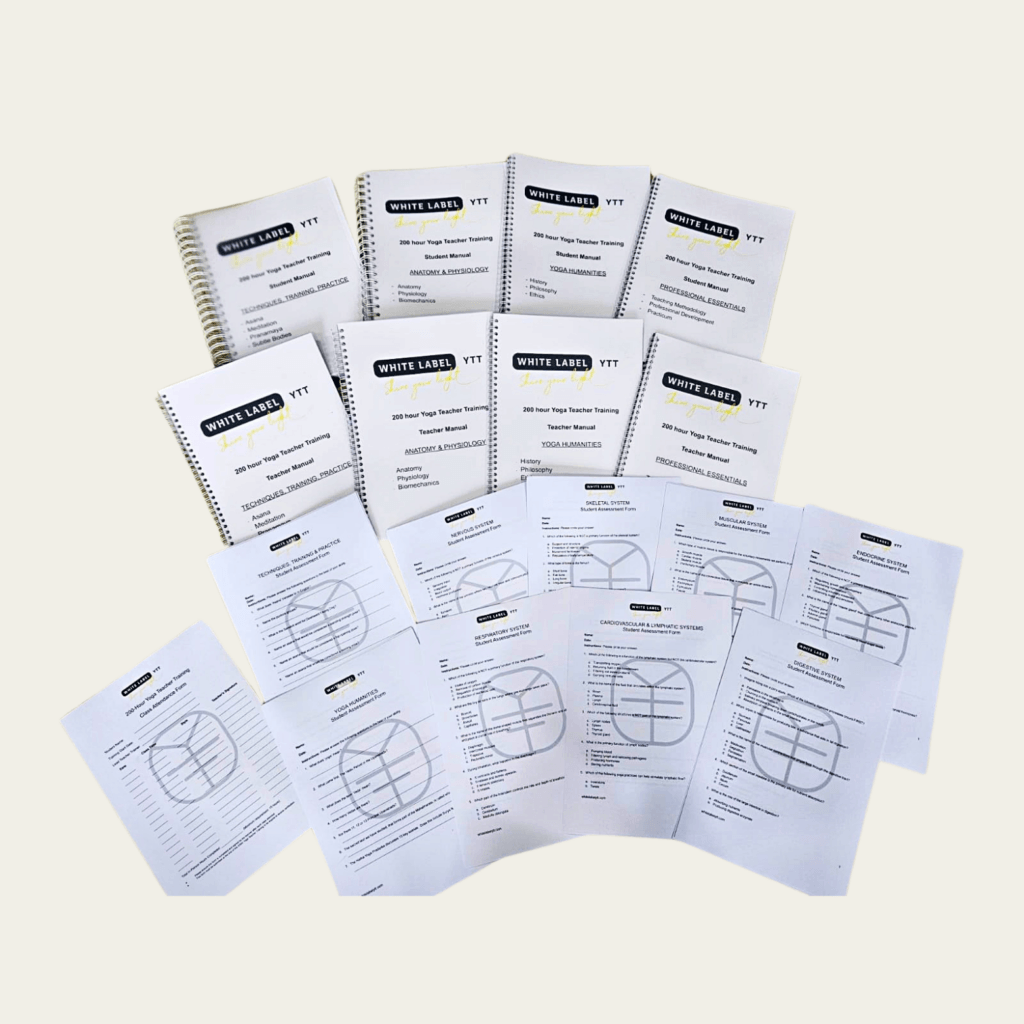
A licensed curriculum is useful whether or not you register, because the hard part is the same: manuals, class plans and assessment. The White Label YTT package gives you four student manuals and four teacher manuals, one for each Yoga Alliance educational category, a class plan for every class and workshop, 16 printable handouts, an anatomy slideshow and business templates. It is branded with your school’s name within 24 hours of receiving your logo.
If you decide to register, the package includes registration guidance and application text to adapt. You still apply, and Yoga Alliance still decides. The licence is a one-off payment with no royalties, no renewals and no per-student fees, and you cannot resell the curriculum. See the complete package page for the full list, or our explainer on what white label yoga teacher training is.
You can see how a registered training looks from the student side on Loka’s 200-hour yoga teacher training page, or check our Yoga Alliance school profile. If you later apply, remember that Lead Trainers must hold E-RYT 500 and teach at least 150 of the 200 hours.
White Label YTT is a done-for-you 200-hour yoga teacher training curriculum, licensed to studios and teachers by Taryn Weggelaar and Yann Cadic, founders of Loka Yoga School in Bali.
Whichever way you lean, look at the curriculum before you choose. Our free training sample shows a real manual chapter and a class plan, so you can judge whether it meets the standard you would want to teach.
If you would like to talk through registration, your lead trainer situation or your timeline, book a short call. We will tell you honestly where you stand.
No. Registration is voluntary. You can design and deliver a training without it, but your graduates will not be able to register with Yoga Alliance through your school.
Yes. Registration is a membership credential, not a legal licence to teach. Many studios hire teachers from unregistered trainings. Check local rules if your country regulates fitness instruction.
No. Only describe your training that way if Yoga Alliance has registered your school. Say honestly what you follow and whether students can register afterwards.
Yes. Many schools run a pilot first, then apply with real attendance and assessment records. Early graduates cannot register through you, so tell them before they enrol.
A Registered Yoga School has had its curriculum, lead trainers and assessment methods reviewed and accepted by Yoga Alliance, and its graduates can apply for the RYT credential. An unregistered school has no such review and no such route.
Many travellers and career changers do, because it lets them compare schools and register as teachers. Local students who already know your studio often care less.
Chat with Taryn!