
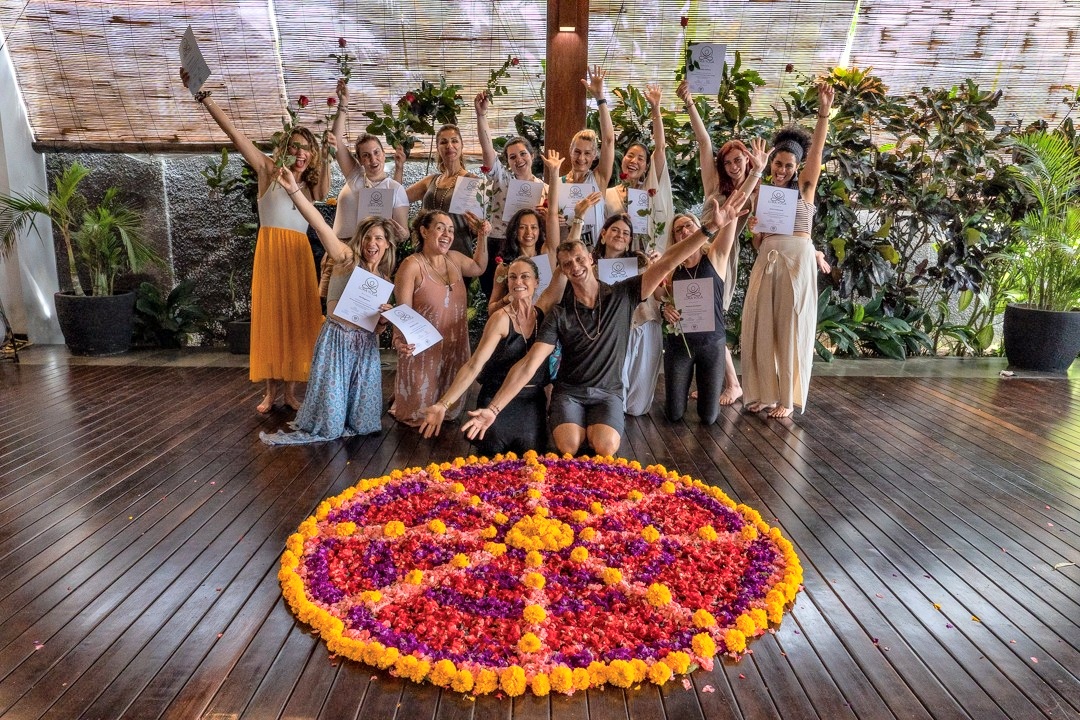
To create a 200-hour yoga teacher training you need five things in place: a qualified lead trainer, a curriculum mapped to Yoga Alliance’s standards, a full set of manuals and class plans, an assessment system, and the policies and paperwork that make it a school rather than a long workshop. This guide walks through each one in the order you will meet them, with what took us longest when we built the training at Loka Yoga School in Bali.
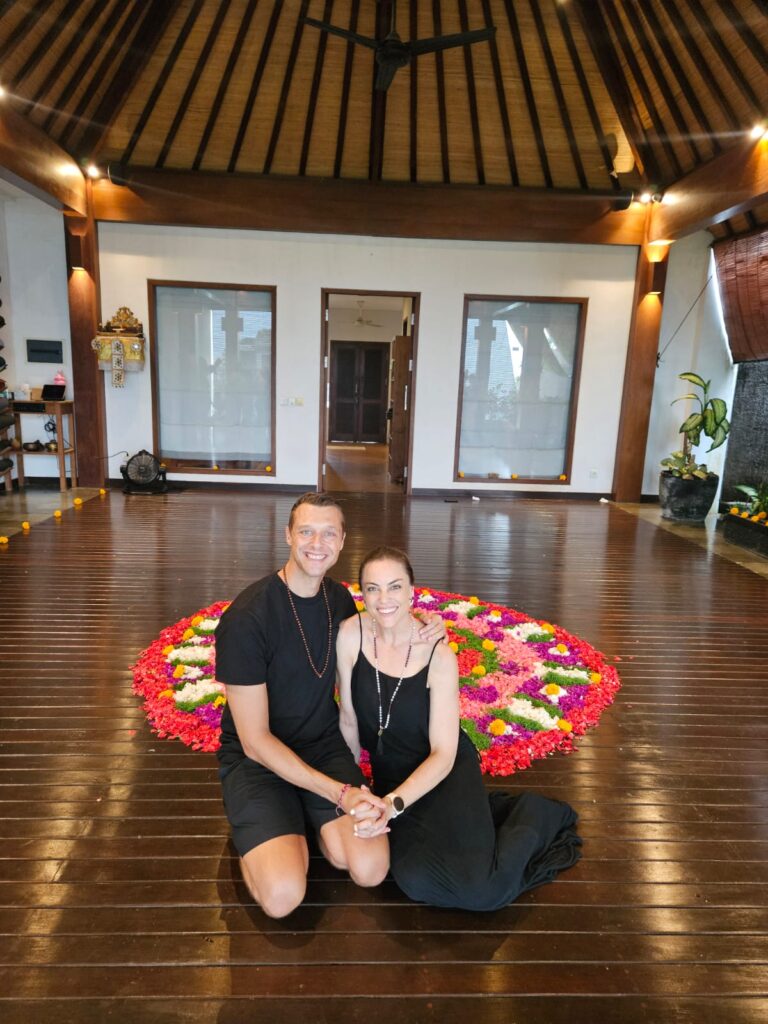
Yann and I wrote Loka’s curriculum over years of trainings, then spent close to a year turning it into a set other schools could teach. Most of what follows is what we wish someone had told us at the start.
In short
In this guide
A 200-hour training is the foundation qualification for yoga teachers. A 200-hour graduate gets hired; studios look for it when they recruit new teachers, and many very good teachers never go further. If your school is registered with Yoga Alliance as an RYS 200, your graduates can register as RYT 200.
Plan for a mixed room. Your first cohort will mostly be your own students, joined by a few career-changers and people who simply want to understand yoga more deeply. Many never intend to teach, and that is fine, but it shapes how you market the training and how you assess it.
Before the curriculum, check the person. Yoga Alliance registers the school, but it looks closely at who leads the training: their designation, their teaching hours and their experience leading trainings. Under the current standards, Lead Trainers must hold the E-RYT 500 designation, and between them they teach at least 150 of the 200 hours, with other faculty covering the subjects they do not teach themselves. The full RYS 200 requirements are in their own guide.
Most schools use two to four teachers across the 200 hours. Anatomy and philosophy are the usual gaps, so decide early who covers them, and make sure they will teach from the same material.
Yoga Alliance groups the RYS 200 standards into four core categories:
Those four add up to 185 hours. The remaining 15 are yours to allocate across the categories, which is where your school’s speciality lives. Check Yoga Alliance’s current standards before you finalise the schedule, because they are reviewed periodically and the organisation has announced changes to its credentials from 2027.
The categories tell you how many hours you need. They do not tell you what to teach in each one, and that is where nearly all the work sits. Our guide to what a yoga teacher training curriculum must include lists the competencies inside each category.
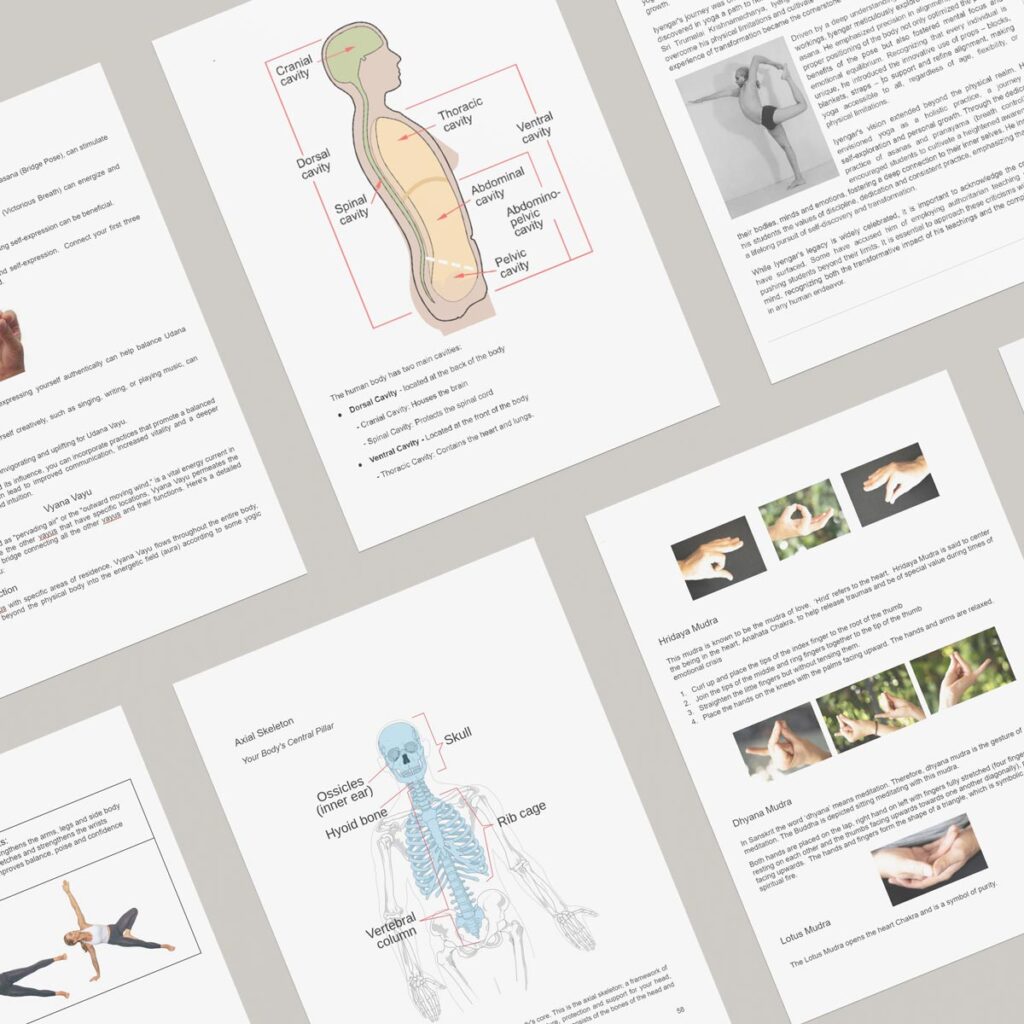
This is the part almost everyone underestimates. A complete training needs:
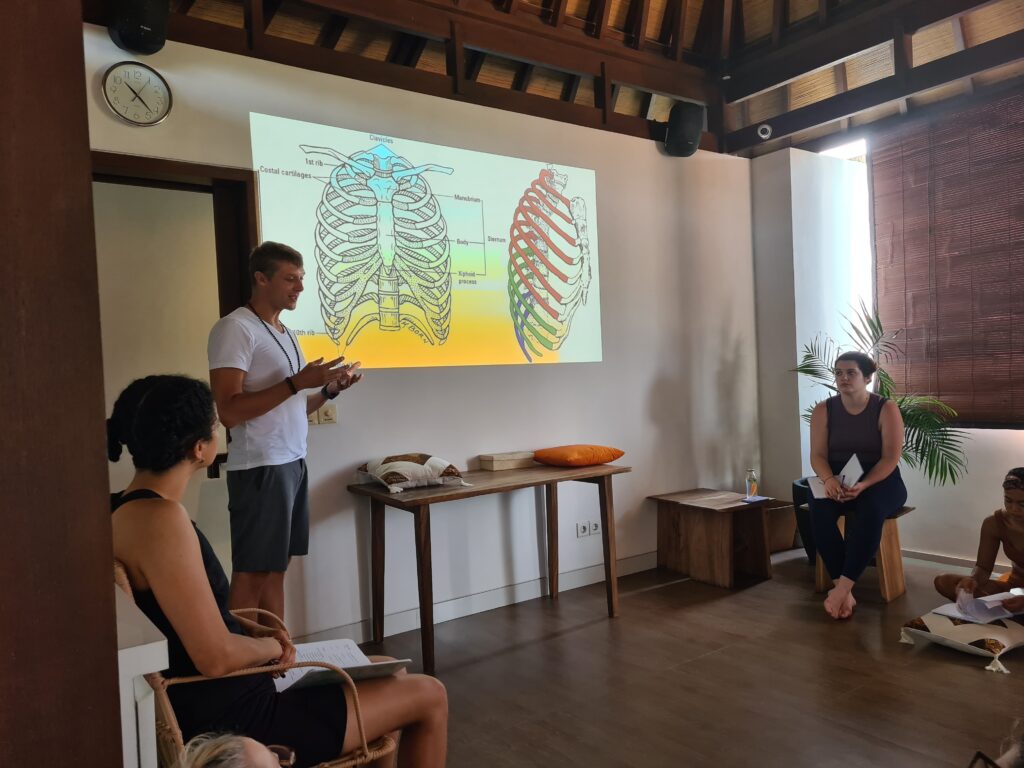
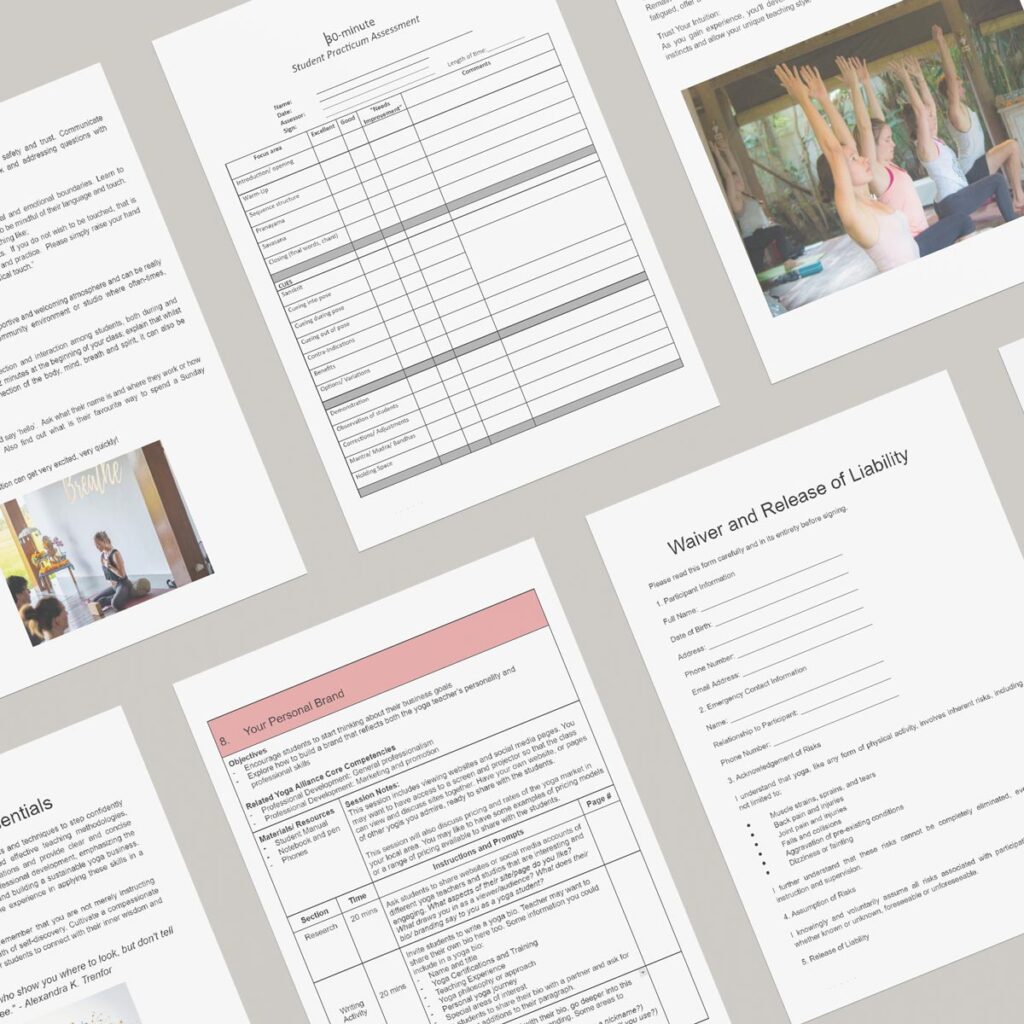
For reference, our own package runs to four student manuals and four teacher manuals (one per category), an anatomy slideshow and 16 printable handouts covering the policies and assessment forms. That is roughly the scale of what you are writing if you build from scratch.
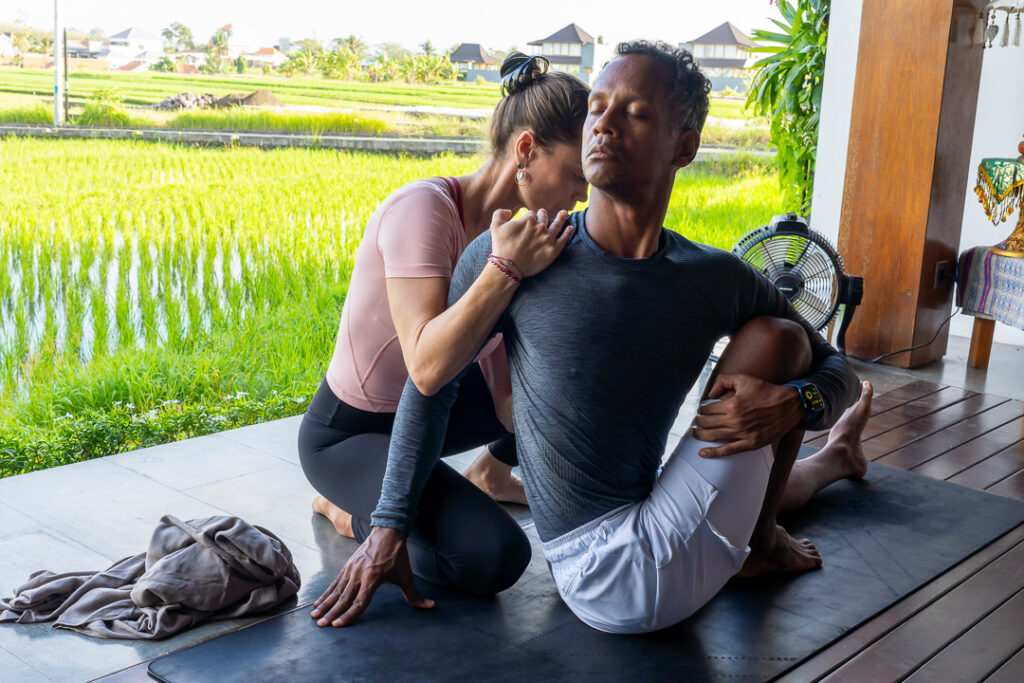
Longer than you expect. Writing manuals that are accurate, clear and in your own voice is the slowest piece, followed by the class plans. If you are writing alongside a full teaching week, plan in months and probably more than a year, not weeks.
A realistic sequence:
If your start date is fixed, work backwards from it and cut scope rather than quality. A smaller elective programme done well beats a sprawling one written in a hurry.
Assessment protects your graduates and your school’s name. A sound system combines attendance against the required hours, observed practice teaching with written feedback, a short written or oral check in each category, and a final practicum where each student leads a full class.
Write down what happens when someone misses hours or is not ready, before the training starts. Graduating a student who cannot yet teach safely is the quickest way to damage a young school, and a clear policy makes the conversation easier for everyone.
Price from your own market and your own costs, not from a feeling. Look at what comparable trainings in your region charge and what students receive for that: contact hours, mentoring, materials, extras.
Then work out your break-even. Add the curriculum cost (your writing time, or a licence), teacher pay for every session, venue time, printing, marketing and the Yoga Alliance fees, and divide by the number of students you can realistically fill. Set a minimum enrolment that covers it, and only confirm dates once you reach it. Every line item, and the break-even method, is in our guide to the cost to run a yoga teacher training.
Build your own if you have a distinctive method, a year or more to give it, and you want every page to be yours. License a ready-made curriculum if your community wants a training soon, if you want a tested structure, or if you would rather spend your energy teaching and enrolling than writing. Our comparison of whether to build or buy a yoga teacher training goes through the trade-offs honestly.
If you license, ask in writing what you receive, whether you can adapt it, whether the licence can be revoked, and whether there are royalties or per-student fees. Our guide to what white label yoga teacher training includes has a full checklist.
White Label YTT is the curriculum we teach at Loka Yoga School, a Registered Yoga School on Yoga Alliance since December 2017 with more than 800 graduates. If you want to see how a full training looks from the student’s side, Loka’s 200-hour yoga teacher training page shows the schedule and subjects as we run them in Bali.
White Label YTT is a done-for-you 200-hour yoga teacher training curriculum, licensed to studios and teachers by Taryn Weggelaar and Yann Cadic, founders of Loka Yoga School in Bali.
If you would rather start from a finished 200-hour curriculum than a blank page, look at a real class plan and manual chapter first and judge the depth yourself. Everything is branded with your school’s name within 24 hours of receiving your logo.
If you want to talk through your timing, format or team, book a short call with us. We will tell you honestly whether you are ready to run a training.
Confirm a qualified lead trainer, map a curriculum to Yoga Alliance’s four RYS 200 categories, prepare manuals, class plans, assessments and policies, then apply to register your school and open enrolment.
No, but your graduates can only register as RYT 200 if your school is an RYS 200, and most students ask for that. We cover the choice in running teacher training without Yoga Alliance.
A curriculum covering Techniques, Training and Practice; Anatomy and Physiology; Yoga Humanities; and Professional Essentials, a qualified lead trainer, and an application describing how you meet each category. Check the current standards before you apply.
Written properly alongside a teaching week, usually more than a year: four manuals, a class plan for every session, assessments and policies, then refinement after the first cohort.
Most schools use two to four: one or more Lead Trainers holding E-RYT 500, who teach at least 150 of the hours, plus specialists for subjects such as anatomy and philosophy.
Yes. Studios hire 200-hour graduates. Pay is usually a flat fee per class or a sliding scale by attendance, and it improves as a teacher builds a following.
Chat with Taryn!