
The cost to run a yoga teacher training is made up of seven things: the curriculum (built or licensed), teacher time, a venue, insurance and paperwork, registration fees if you apply, marketing, and a buffer for the things nobody plans for. The biggest line is almost always people’s time, not cash, so the honest way to price it is to count both.
We have run trainings at Loka Yoga School in Bali for years, and the hidden costs are what surprise studio owners. This guide lists each line item in the order you will meet it, and finishes with a simple method for working out how many students you need to break even.
In short
In this guide
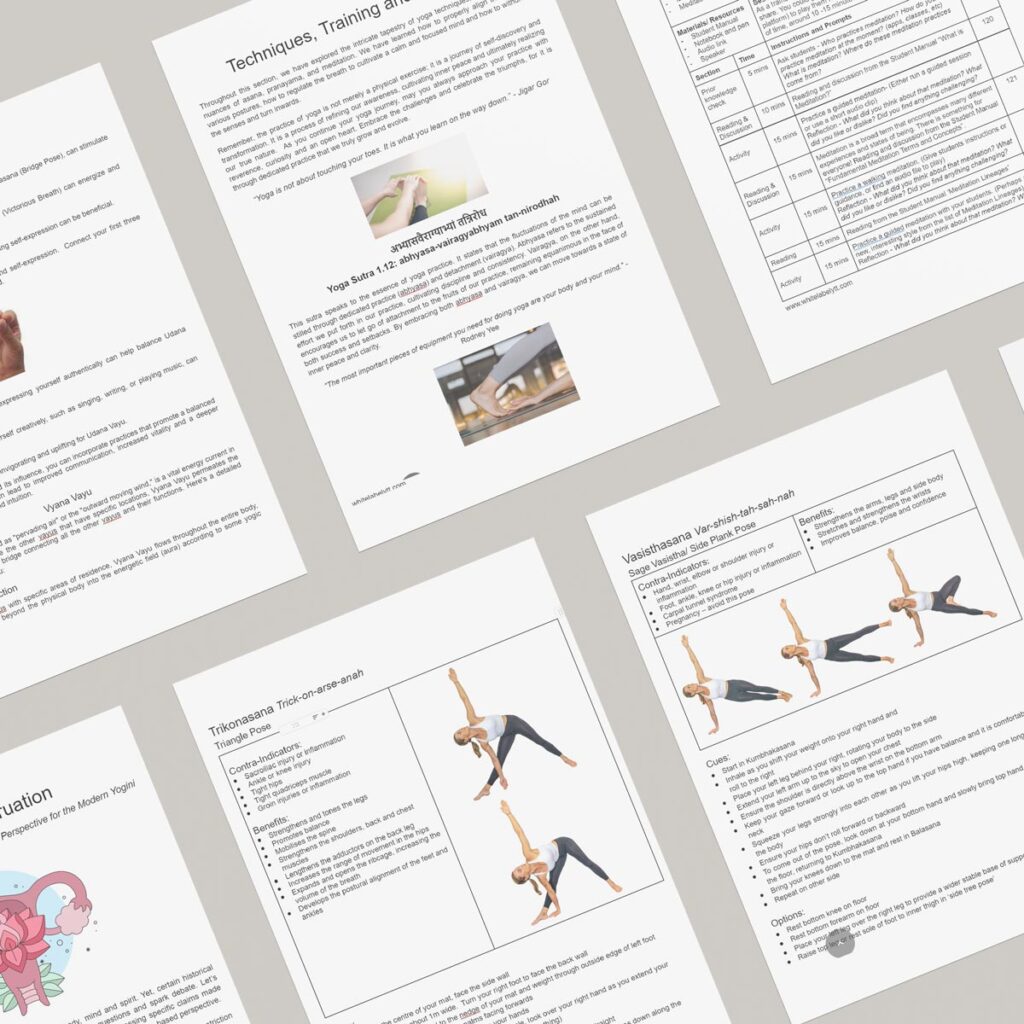
A 200-hour training needs manuals, class plans, handouts and assessment forms before the first student arrives. You can write them yourself, hire someone to write them, or licence a finished curriculum. Each route has a different cost profile.
Writing it yourself costs little cash but a lot of hours. For a registered training, you need four manuals’ worth of content mapped to Yoga Alliance’s educational categories, and a plan for every session. Be honest with yourself about how many evenings that is, and what else you will not do with them. We compare the routes in build or buy a yoga teacher training.
Licensing moves the cost to a single, known payment at the start. With White Label YTT that is one payment, with no royalties, no renewals and no per-student fees, for a licence we cannot revoke. The curriculum is not yours to resell. Pricing is discussed on a discovery call.
Teacher time is the largest running cost, and it is easy to undercount. A 200-hour training has 200 hours of delivery, but your lead trainer also spends time preparing, marking, giving feedback and answering messages.
If you lead the training yourself, the cost is the classes and income you give up. If you pay others, work out a rate per contact hour for each person, then add time for preparation and for assessment. Guest specialists, for example a physiotherapist teaching anatomy, are usually paid by the session.
Remember the lead trainer rule if you plan to register: Yoga Alliance asks for Lead Trainers who hold the E-RYT 500 credential and teach at least 150 of the 200 hours. If you do not have one on your team, paying for one is a real line item. The full rules are in our guide to the RYS 200 requirements.
If you run the training in your own studio, the venue is not free, because every hour of training is an hour you cannot sell as a class. Count the lost class income for the training days, not just the rent.
Then add the small things that become large across a cohort: mats, bolsters, blocks, blankets, a screen or projector for the anatomy slideshow, printing manuals, tea and water. Trainees usually expect a printed or digital manual, so decide early which you will provide and who pays.
If you plan a retreat-style training abroad or at a rented venue, accommodation, meals and the venue hire dominate the budget. That is a different model with different risks.
Your existing studio policy may not cover teaching a training. Ask your broker whether trainees, practicum classes and any guest teachers are covered, and put the answer in writing. We cover the questions to ask in more depth in a later guide.
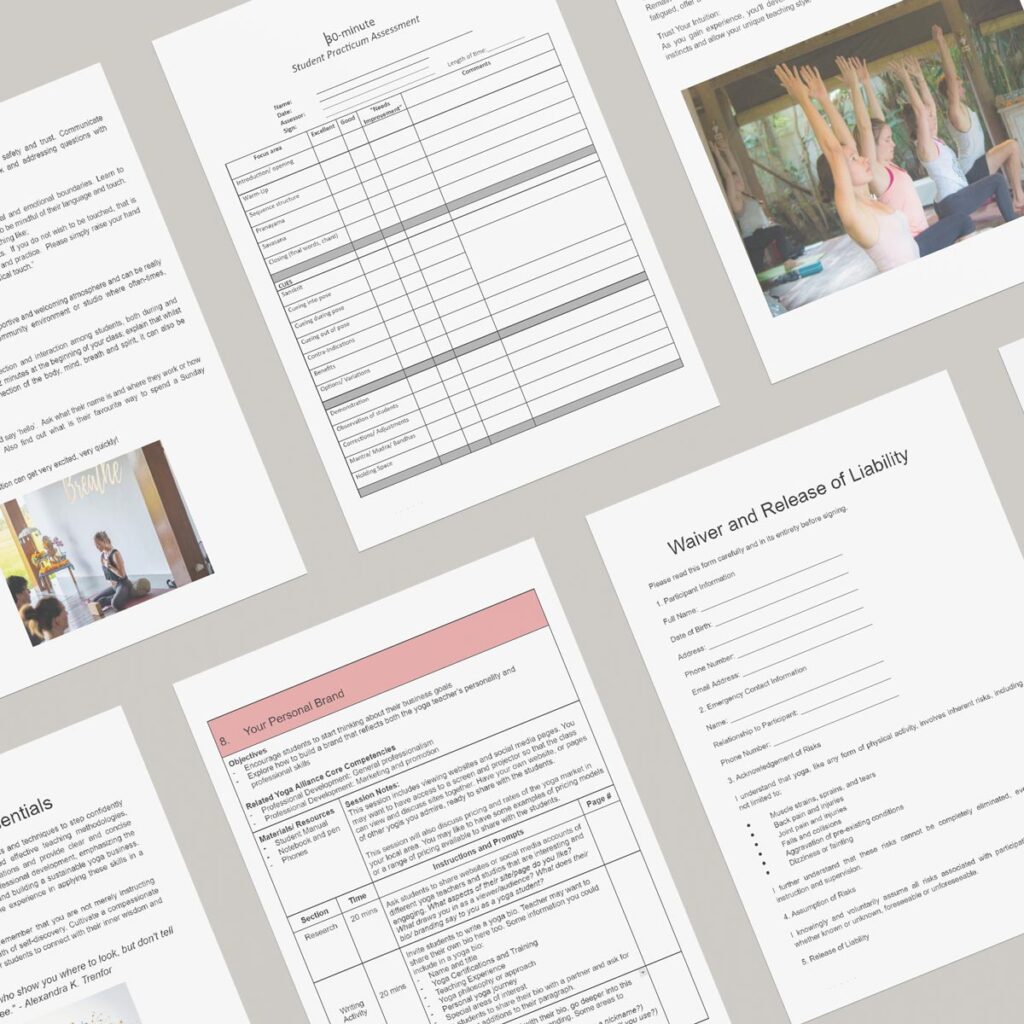
Paperwork is cheap if you start from templates and expensive if you improvise. Waivers, invoices, a model release, attendance records, a refund policy and a grievance policy are all needed. Our package includes business templates and 16 printable handouts for this reason, so you are adapting documents instead of drafting them.
Registration is optional, and we explain the choice in our guide to running teacher training without Yoga Alliance. If you do apply to become a Registered Yoga School, there are costs beyond the fees themselves: the time to complete the application, the credentials your lead trainer must hold and keep, and any membership dues.
In October 2026 Yoga Alliance’s own site listed a one-off application fee of US$400 and an annual membership fee of US$240 per credential. Fees change, so check the current schedule before you budget. Yoga Alliance reviews the application and decides, so allow time in your plan for questions coming back. Our RYS 200 guide above lists what to prepare.
A training does not fill itself, even in a busy studio. Budget for an information evening, a landing page, email to your own list, a few weeks of paid promotion if you use it, and the hours you spend answering questions from people who are still deciding.
Your own students are the most likely first cohort and the cheapest to reach. Outside that group, the cost per enrolment rises quickly. Plan for a smaller first cohort than you hope for, and build your numbers on that.
Add a margin for what you did not plan: a trainee who needs extra feedback, a teacher who drops out the week before, a venue change, a refund. A buffer of some percentage of your total is standard practice in any small business, and a training is no different. Decide the figure from your own books rather than copying someone else’s.
Refunds deserve their own thought. Write the policy before you take the first deposit, and keep it consistent with consumer law where you live.
Break-even is a short calculation, and you can do it on one page. Add every cost above for one cohort, including a fair value for your own time. Divide the total by the number of students you expect to enrol, and you have the minimum tuition per student that covers the training.
Then run it again with fewer students. If a cohort of six covers costs but a cohort of three loses money, you now know your minimum enrolment, and when to postpone a start date. We go through minimum numbers and student pricing in more detail in later guides.
For a student-side view of how tuition is set elsewhere, Loka’s own Bali yoga teacher training cost guide compares what students pay.
The main change is the shape of the spending. Instead of months of unpaid writing time and an uncertain finish date, you pay once at the start and know what you have. The rest of the lines above do not go away: you still need teachers, a venue, insurance and students.
The White Label YTT package includes four student manuals and four teacher manuals, a class plan for every class and workshop, an anatomy, physiology and biomechanics slideshow, 16 printable handouts, business templates such as waivers and invoices, and registration guidance with application text you can adapt. Everything is branded with your school’s name within 24 hours of receiving your logo. The complete package page lists everything.
The curriculum is the one we teach at Loka, a Registered Yoga School on Yoga Alliance since December 2017. Our guide to how to create a 200-hour yoga teacher training puts these costs in the context of the whole project.
White Label YTT is a done-for-you 200-hour yoga teacher training curriculum, licensed to studios and teachers by Taryn Weggelaar and Yann Cadic, founders of Loka Yoga School in Bali.
The easiest cost to judge is the curriculum, because you can look at it. Our free training sample shows a real manual chapter and a class plan, so you can compare the depth with what you would otherwise write.
If you would like to talk through your numbers, book a short call. We will tell you honestly whether licensing is the right fit for your studio, or whether building your own makes more sense.
It depends on your curriculum route, your team, your venue and your marketing. The main lines are the curriculum, teacher time, space, insurance and paperwork, registration if you apply, and marketing. Add up each line for one cohort, then divide by the number of students you expect.
For most studios it is time: writing the curriculum and teaching the hours. If you pay outside teachers or rent a venue, those become large cash costs. Licensing a curriculum turns the writing time into a single payment.
Add every cost for one cohort, then divide by the tuition you plan to charge. The answer is your minimum enrolment. Run the sum again with fewer students to see where the training stops paying for itself.
Only if you choose to register as a Registered Yoga School. Registration is optional, and Yoga Alliance sets its own fees and decides on applications. Check their current fee schedule before you budget.
It is cheaper in cash and more expensive in time. Many studios underestimate the hours that manuals and class plans take. Compare the value of your time with a one-off licence before you decide.
Yes, but be clear with students about what your training does and does not lead to. Do not describe it as meeting Yoga Alliance standards unless you are registered, and say plainly whether graduates will be able to register.
Chat with Taryn!